



Personality Spotlight
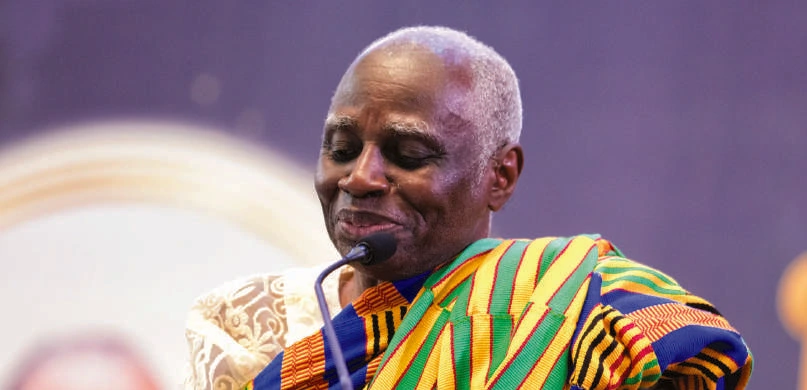
Tsatsu Tsikata — a legal luminary, an academic and a former CEO of GNPC
 6 mins (approx.)

Introduction
Few personalities in Ghana today, evoke as much admiration, debate, and intellectual respect as Tsatsu Tsikata. Celebrated as a legal luminary, an academic mentor, a strategic thinker, and a dedicated public servant, Tsikata’s life is deeply intertwined with the development of Ghana’s natural resources sector, especially the rise of the petroleum industry from a distant ambition into a central engine of national development.
Tsatsu Tsikata was born on 1st October 1950, in Keta. He is on record to have achieved remarkable academic laurels from an early age. He entered Mfantsipim at age 9 through a United Africa Company (UAC) scholarship in 1960 and completed at the age of 14.
Tsatsu enrolled in the University of Ghana and graduated with a First Class Honours in law (LLB) in 1968/69 and subsequently earned a scholarship to the University of Oxford’s Corpus Christi College as a postgraduate student, where he also graduated with First Class Honours in Civil Law.
Working Life and the road to Greatness
Before rising to national prominence, Tsikata lectured at the University of Ghana’s Faculty of Law, where he became one of the most revered lecturers of his generation. Students admired his clarity of thought, analytical depth, and ability to make complex subjects accessible.
Many of today’s prominent Ghanaian lawyers, including former Attorneys General, Gloria Akuffo and Papa Owusu Ankomah, former Chief Justices, Anin Yeboah and Gertrude Torkornoo, former and current Speakers of Parliament, Edward Doe Adjaho and Alban Bagbin respectively, were all his students. Policymakers in Ghana today regard him as one of their most influential legal mentors.
In 1988, Tsatsu Tsikata was appointed as Chief Executive of the Ghana National Petroleum Corporation (GNPC) by the PNDC government. At the time, Ghana had not yet discovered significant offshore oil, and the petroleum sector was underdeveloped. Yet this was the challenge that ignited Tsikata’s strategic vision.
He approached the GNPC not as a mere administrative role, but as an institution-building project central to Ghana’s long-term economic future. Under his leadership, GNPC transformed into a technically competent and internationally respected national oil company.
One of Tsikata’s most enduring contributions was his insistence on Ghanaians becoming the technical backbone of their own petroleum industry. To achieve this, he championed the sponsorship of Ghanaian geo-scientists, engineers, and petroleum economists, as well as graduate training programs and international scholarships. He also partnered with global oil companies and research institutions, and developed in-house expertise in exploration, drilling and petroleum economics.
Interestingly, GNPC attributes the creation of the Tema Lube Oil Company (TLOC) and the GNPC-designed "Kleenkuk" cook gas stoves to Tsatsu as his brainwork that was geared towards industrial growth and environmental stewardship long before the widespread focus on energy transition.
A significant number of the professionals who would later lead the effective management of the Jubilee Field and Ghana’s deepwater petroleum operations trace their development to capacity-building initiatives introduced during Tsikata’s tenure at GNPC. His guiding conviction was that natural resources could advance national interests only when supported by a competent, well-trained and confident indigenous workforce.
Leveraging his legal expertise, Tsikata contributed significantly to strengthening the contractual and regulatory framework governing petroleum operations, ensuring that agreements with international oil companies were both technically rigorous and legally defensible. His work encompassed negotiating petroleum contracts that safeguarded national interests, promoting transparency and scientific integrity in exploration activities, and establishing legally durable provisions for licensing and resource ownership.
Beyond his work within Ghana, Tsikata played a role in the early deliberations surrounding the West African Gas Pipeline, advocating for Ghana’s strategic position in regional energy supply.
Tsatsu Tsikata is widely recognized today as a principal architect of Ghana’s modern petroleum industry. Following his tenure at GNPC, he has continued to contribute through legal practice, public commentary, arbitration and mentorship.
Tsatsu Tsikata’s character is distinguished by intellectual rigor, strategic foresight, and a steadfast commitment to national development. His contributions to the natural resources sector illustrate how leadership grounded in expertise, discipline, and vision can influence a nation’s economic trajectory. Whether regarded as a legal authority, an academic leader, or a petroleum strategist, his work remains integral to Ghana’s emergence as an oil-producing nation.
As a barrister, Tsatsu served as Counsel to a number of notable personalities. He was counsel for Jerry Rawlings during the treason trial in 1979. He also defended Samuel Okudzeto and William Ofori Atta who stood political trial during the National Redemption Council and Supreme Military Council military regimes in the Acheampong era.
Tsatsu Tsikata was part of the legal team, alongside Nana Akufo-Addo, in arguably one of the famous constitutional law cases in the Ghanaian Legal history, Tuffour v Attorney General, that challenged the removal of Justice Fred Kwasi Apaloo as the Chief Justice. That case established the legal principle that no arm of government, including Parliament is above the Constitution.
In recent years, he was the lead Counsel for the National Democratic Congress (NDC) in the 2012 election petition where President Mahama was affirmed by the Supreme Court as the winner of the 2012 General elections. Tsikata again represented John Mahama in the 2020 election petition against the electoral commission and the then President Akufo-Addo. Tsatsu has had his fair share of the injustices in the Ghanaian system and the sufferings that naturally but unfortunately occasion people who resolve to fight corruption. However, these misfortunes have not deterred him from serving his country.
Tsatsu is married to Esther Cobbah, a leading communications strategist, and a CEO of StratCom Africa. Their union is one of mutual respect, shared values and commitment to professional excellence. He has three children, one of whom is an award-winning Ghanaian musician. Tsatsu is also an elder of the Asbury Dunwell Church in Accra.
Conclusion
Mr. Tsikata’s story is not just one of brilliance, but of unwavering principles, resilience and dignity in the face of adversity. As a renowned legal practitioner, his career as a former CEO of GNPC, an astute academic and an advocate at the Supreme Court of Ghana has been nothing but exceptional. No wonder he is celebrated globally as one of the best lawyers to have emerged from Ghana.
About this source
Transcribed from The Edfields Natural Resource Journal — July 2026, PDF pages 69–71. The original PDF retains the published layout, illustrations and references. Contributor roles are as printed in the publication. The cover reads July 2026; the editorial reads June 2026. The edition date remains under review.